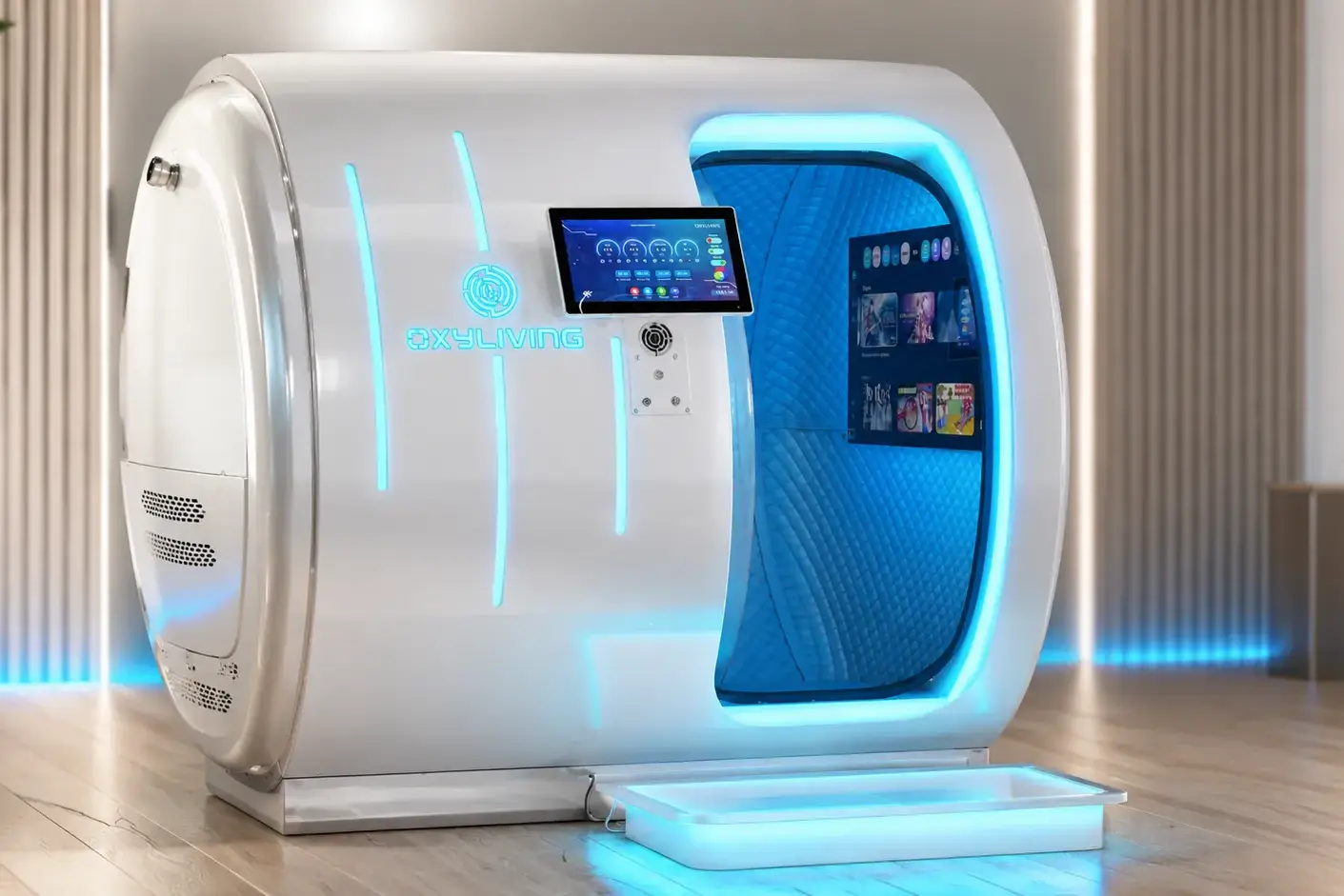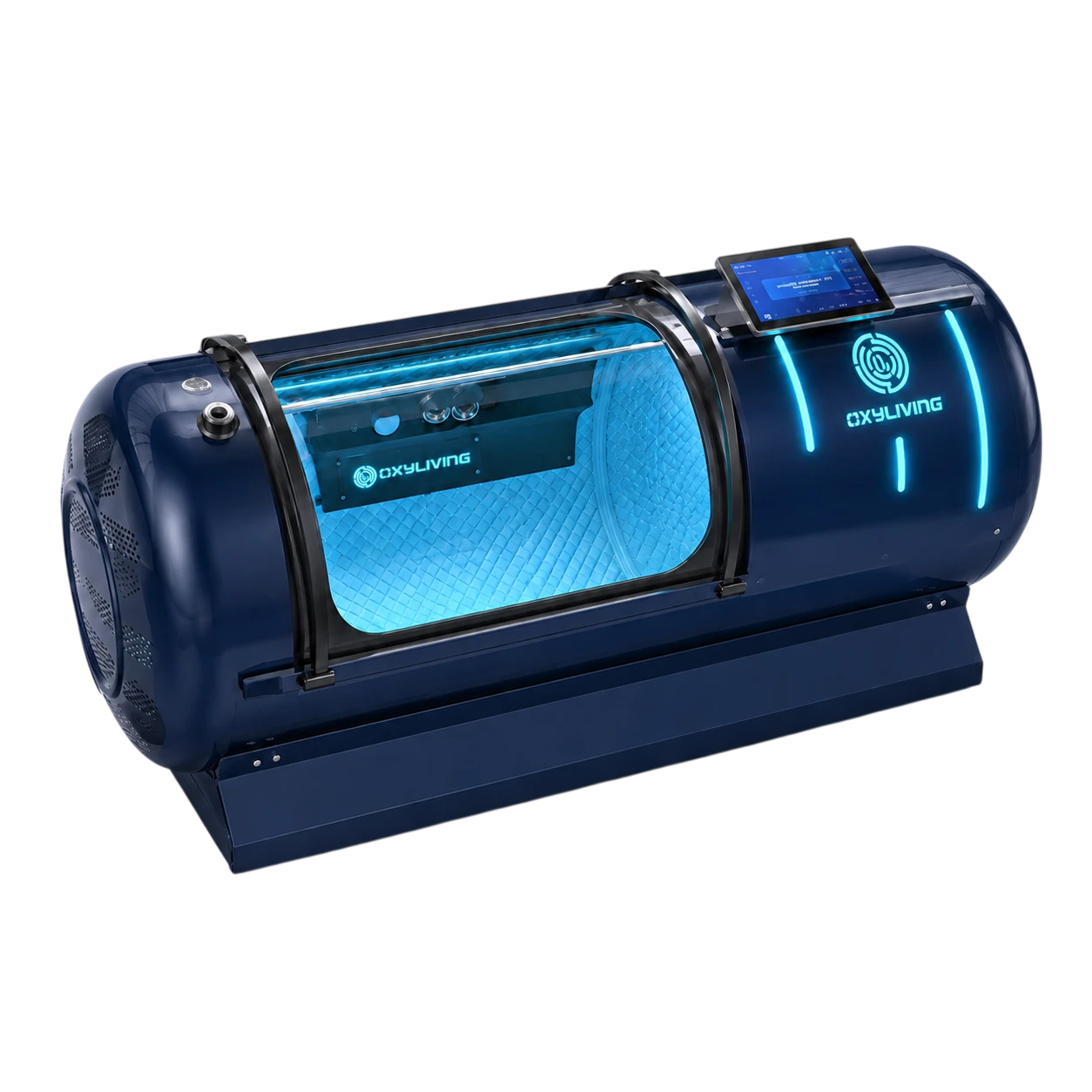


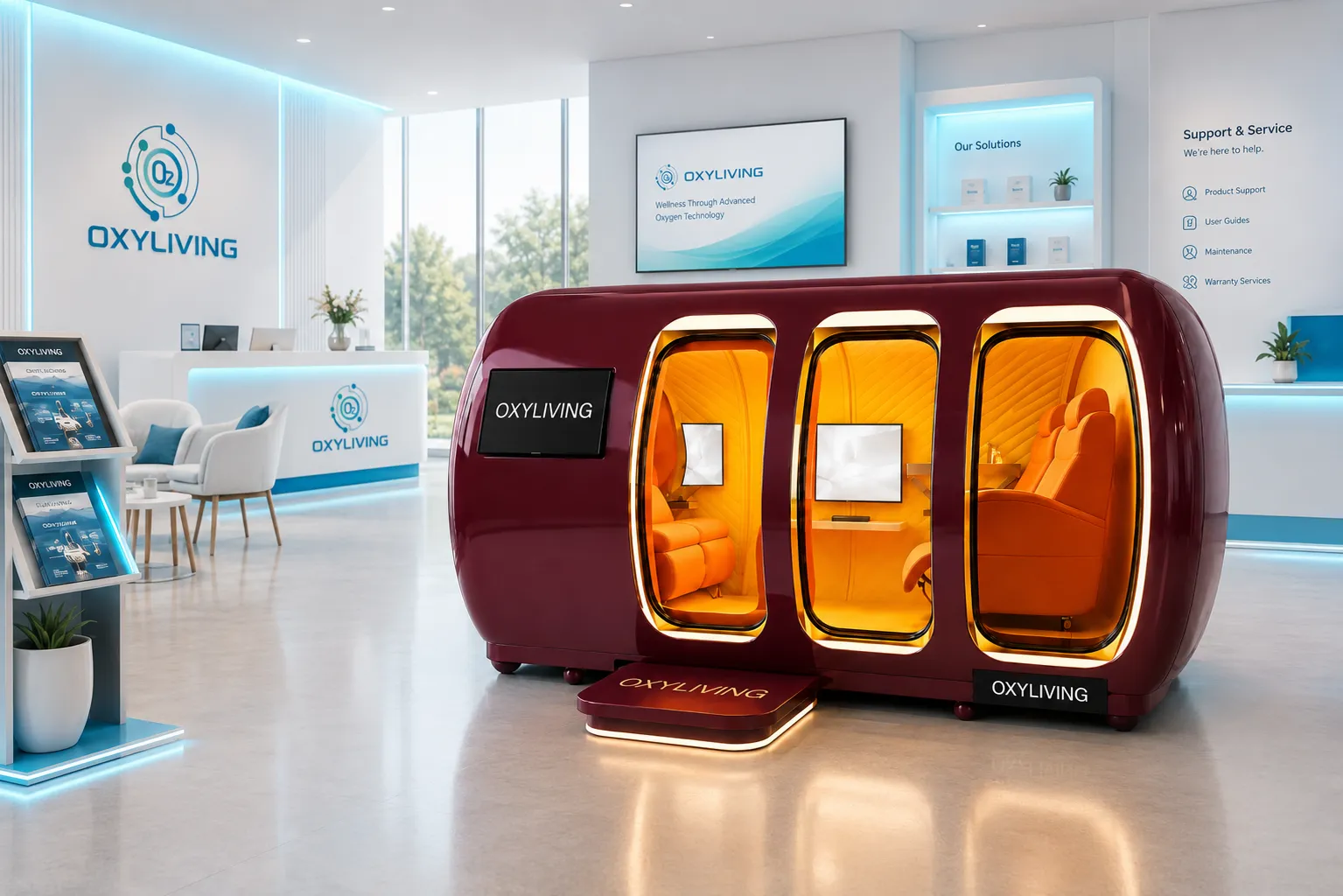




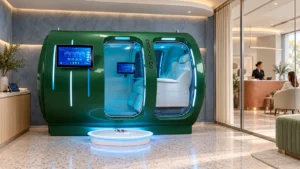
There is no list price for a hyperbaric chamber, and any supplier quoting one without asking questions first is selling you something generic. These cabins are pressure vessels built to order: capacity, shell construction, oxygen supply and the room they go into all move the figure. This guide sets out what actually drives the cost, what you keep paying after delivery, and the questions worth asking before you compare two quotes side by side.
Why hyperbaric chambers don’t have a list price
A hyperbaric chamber is not a catalogue appliance. It is a certified pressure vessel, welded and tested to a standard, then fitted out for a specific room and a specific pattern of use. A single-seat capsule for a private home and a fourteen-person room for a wellness centre share a principle and almost nothing else.
That is why serious manufacturers quote rather than publish. It also means two quotes can differ substantially without either being wrong — they may simply describe different machines.
What drives the price of a hyperbaric chamber
Six things account for most of the variation.
1. Capacity. The single largest factor. Every additional occupant adds internal volume, and volume drives steel, weld length, compressor capacity and oxygen generation. The step from a one-person capsule to a four-person room is far bigger than the step from one to two.
2. Shell construction. Hard-shell cabins are rigid pressure vessels, usually aluminium or steel. Soft-shell units are flexible fabric envelopes. They are not the same category of product and the price gap reflects that — as does the pressure each can reach and how long each lasts. We cover the trade-off in detail in our guide to soft-shell versus hard-shell chambers.
3. Where the oxygen comes from. A chamber with a built-in concentrator makes its own oxygen from ambient air. A cylinder-fed chamber costs less up front and then keeps costing — cylinders, delivery, storage and the handling rules that come with them. On-site generation moves spend from the running budget to the purchase.
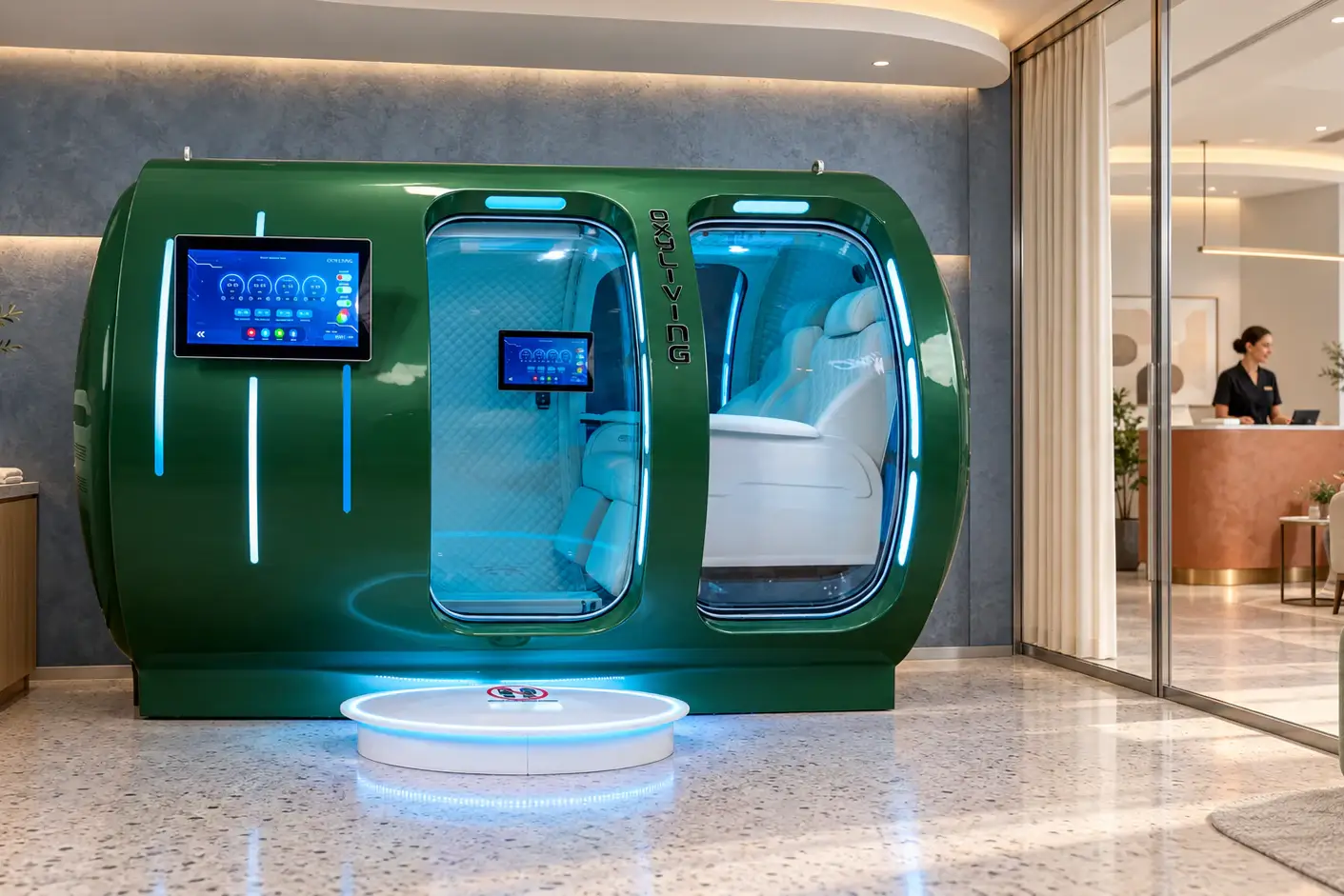
4. Interior specification. Upholstery, seating format, lighting, glazing, screens and colour. This is where made-to-order shows up most visibly, and where budgets are easiest to control, because the engineering underneath does not change.
5. The room it goes into. Floor loading, ceiling height, door widths, power supply and ventilation. A chamber that fits through the door and onto the existing floor costs less to install than one that needs a crane, a knocked-through wall or an electrical upgrade.
6. Certification. A cabin built and audited to a pressure vessel standard such as BS EN 13445-2, with documented welding qualification, costs more to produce than one assembled without that paperwork. That difference is real engineering, not margin. Our safety and standards guide explains what the certificates mean.
The costs that arrive after delivery
Purchase price is the number people compare. Running cost is the number that decides whether the chamber is still a good decision in year three.
Electricity. The compressor and concentrator draw power throughout every session. Session length and daily session count matter more than the headline rating.
Consumables. Filters have a service interval. Ask what needs replacing, how often, and what each item costs.
Servicing. Pressure equipment needs periodic inspection. Ask whether that is included, for how long, and what happens afterwards.
Operator time. Multi-person rooms are supervised from an external panel. That is a staffing line, and for a commercial operator it is often larger than the electricity.
Downtime. Ask about parts availability and typical response time. A chamber waiting for a part earns nothing.
Questions to ask before comparing two quotes
Quotes are only comparable once you know they describe the same thing. Before you put two numbers next to each other, ask each supplier:
Which pressure vessel standard is the cabin certified against, and can you see the certificate? What working pressure is it rated for, and is that the rated figure or the maximum? Is oxygen generation included or is the chamber cylinder-fed? What exactly is in the delivery and installation line? What does the warranty cover, for how long, and what voids it? What is the first-year consumable cost? Who performs service, and where are they based?
A quote that is materially cheaper usually differs on one of these points. Finding out which one is the whole exercise.
How Oxyliving prices a chamber
Every Oxyliving chamber is built to order in Kocaeli, Türkiye, from aircraft-grade aluminium, with on-site oxygen generation included as standard and a working pressure of up to approximately 2 ATA across the range. Pricing follows the configuration: which model, which interior, and what the installation site requires.
The practical route is to tell us the room, the capacity you need and how many sessions a day you expect. You can compare the seven models on the models page, or send the specification straight through the quote form and we will come back with a figure against it.
The information on this page is provided for general awareness only. It is not medical advice or a diagnosis. Please consult a physician for any decisions about your health.
Related Posts
September 21, 2026
What Does Hyperbaric Mean? Rooms and Chambers Explained
Hyperbaric is a technical term for pressure above normal. What the word means,…