



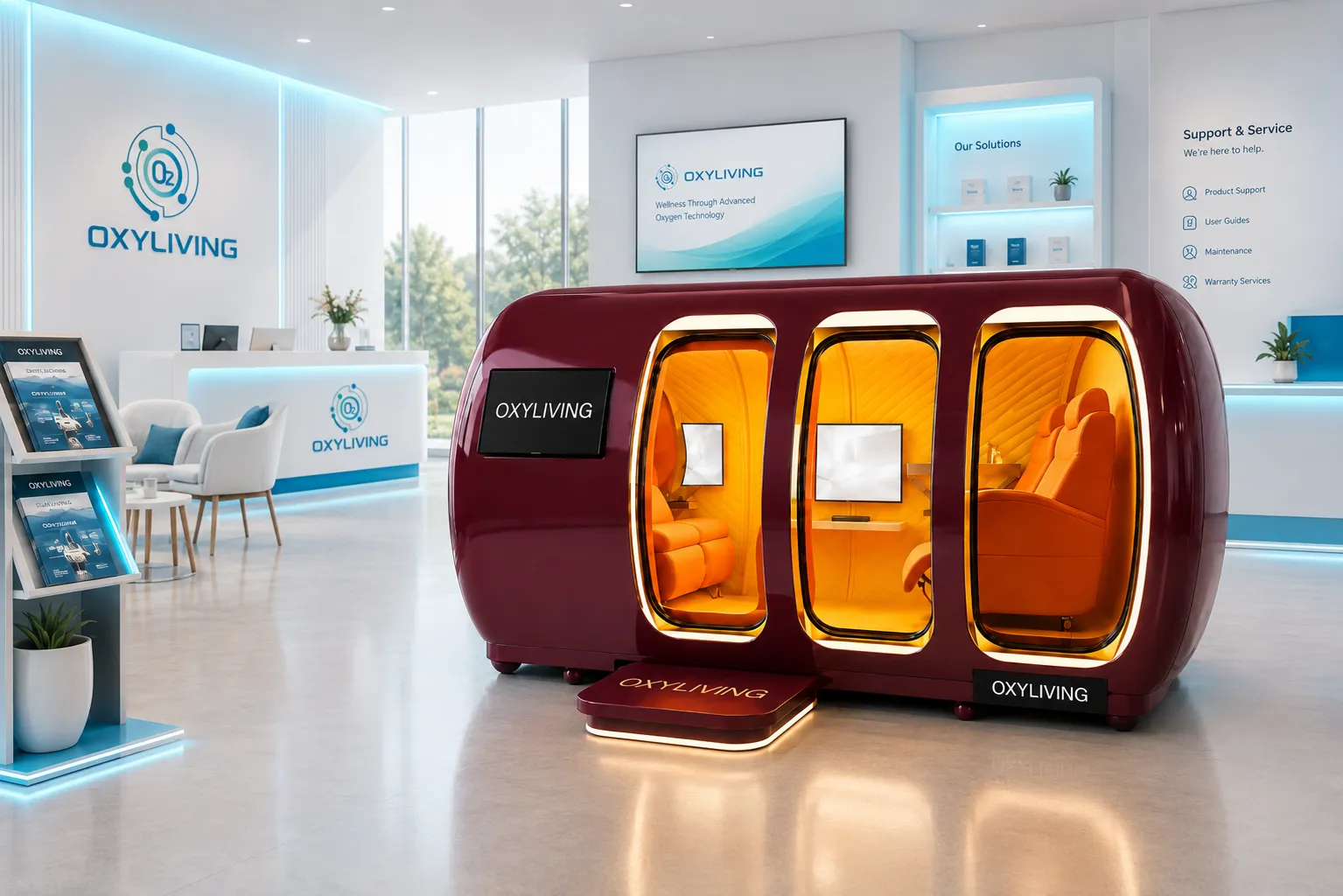




Oxygen chamber safety should be the first thing you evaluate before buying — not an afterthought once you’ve fallen for a sleek design or a low price. A well-engineered chamber is built with layers of protection that keep every session calm and secure, while a poorly made one cuts corners you can’t always see. This guide walks through oxygen chamber safety in practical terms: the features that matter, the standards that signal quality, and the questions to ask before you commit — so you can choose a chamber with real confidence.
Why oxygen chamber safety matters
An oxygen chamber does two things at once: it raises the surrounding pressure and it supplies oxygen-rich air. Both are completely manageable when the equipment is well designed — but both are reasons to take oxygen chamber safety seriously. Pressure needs to rise and fall smoothly and be held steadily. Oxygen needs to be delivered, monitored and ventilated properly. A quality chamber handles all of this automatically and reliably, which is exactly what lets you relax and simply enjoy the session.
The good news is that oxygen chamber safety isn’t a mystery. There are specific, checkable features and standards that separate a genuinely safe, well-built chamber from a basic one. Once you know what they are, comparing chambers becomes far easier.
Key oxygen chamber safety features to look for
These are the core oxygen chamber safety features a quality chamber should include. Treat any chamber that lacks them with caution.
Multiple oxygen sensors
Because a chamber supplies oxygen-rich air, monitoring oxygen levels is essential. Look for a chamber with more than one oxygen sensor, so levels inside the cabin are tracked accurately and continuously. Redundancy here is a hallmark of thoughtful oxygen chamber safety — if one reading matters, two matter more.
Automatic ventilation
A well-designed chamber ventilates the cabin automatically, refreshing the internal air on a regular cycle. This keeps the environment fresh and comfortable throughout a session and is a key part of managing oxygen safely. Automatic ventilation means you don’t have to think about it — the system simply does its job.
A well-designed pressure system
Pressure should rise gradually to around 2 ATA, hold steadily, and ease back down smoothly at the end. Sudden changes have no place in a quality chamber. A properly engineered pressure system, with clear controls, is central to oxygen chamber safety and to a comfortable experience.
Quality build materials
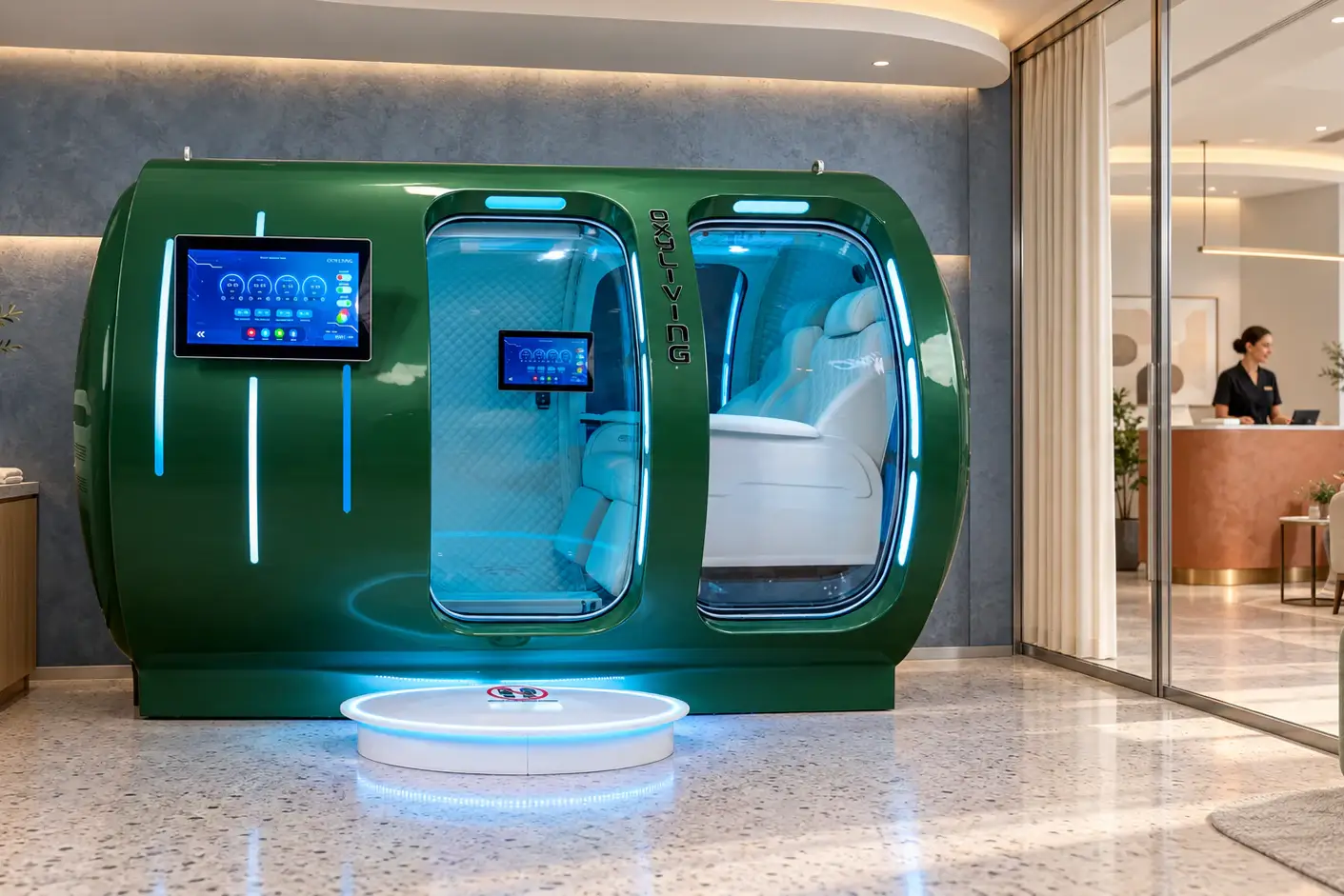
The structure itself is a safety feature. A rigid chamber built from marine-grade aluminium (such as 5083 alloy) is engineered to hold pressure reliably for years, with no fabric to fatigue or seams to fail. Robust construction and a solid, well-sealed door underpin everything else. Pressure equipment worldwide is built to recognized engineering standards, and reputable bodies such as the American Society of Mechanical Engineers set widely used benchmarks for pressure-vessel construction.
Clear controls and communication
You should always be able to see what’s happening and stay in contact with anyone outside. Look for clear displays, intuitive controls and the ability to communicate easily from inside the cabin. Large viewing windows add both reassurance and an extra layer of oxygen chamber safety by keeping you connected to the room.
Standards and certifications that signal quality
Beyond individual features, certifications and standards give you independent evidence of quality. They show that a chamber has been built and tested against recognized benchmarks rather than simply assembled. When evaluating oxygen chamber safety, look for:
- Recognized quality and manufacturing certifications, such as ISO quality-management standards, which indicate disciplined, consistent production.
- Relevant conformity marks for the region, such as CE marking in Europe, showing the product meets applicable requirements.
- Pressure-equipment and construction standards, which govern how pressurized cabins are designed and built.
A trustworthy manufacturer will be transparent about which standards and certifications apply to their chambers. If a supplier is vague about this, treat it as a warning sign — genuine oxygen chamber safety is something a good manufacturer is proud to document. You can always ask us about the standards behind our chambers.
Oxygen chamber safety at home versus in a business
The core oxygen chamber safety principles are the same everywhere, but the context adds a few considerations.
At home, sensible placement and good ventilation in the room matter, alongside the chamber’s own systems. Following the manufacturer’s guidance on installation and airflow keeps everything running safely. In a commercial setting — a studio or spa — there’s the added responsibility of client safety and aligning with local regulations for oxygen use in public-facing spaces. Staff should understand how the chamber works, and the environment should be set up with proper ventilation and clear procedures. In both cases, starting with a well-built, well-certified chamber makes everything that follows simpler.
Questions to ask before you buy
A short checklist to put any chamber — and any supplier — to the test on oxygen chamber safety:
- How many oxygen sensors does the chamber have, and how is oxygen monitored?
- Does it ventilate automatically, and how often?
- How does the pressure system rise, hold and release — and how is it controlled?
- What is the chamber built from, and how durable is the construction?
- Which standards and certifications apply to the chamber?
- What guidance and support are provided for safe installation and use?
- Can I communicate easily from inside, and can I see clearly out?
A confident, transparent answer to each is a strong sign of a quality manufacturer. To understand how these systems come together, our guide on high-pressure oxygen is a helpful companion read.
Frequently asked questions
What are the most important oxygen chamber safety features?
The essentials are multiple oxygen sensors, automatic ventilation, a smooth and well-controlled pressure system, robust build quality, and clear controls with the ability to see and communicate from inside the cabin.
Are oxygen chambers safe to use?
A well-designed, well-built chamber used according to the manufacturer’s guidance manages pressure and oxygen safely and automatically. As with any equipment, quality of construction and sensible use are what keep the experience safe.
What certifications should a quality oxygen chamber have?
Look for recognized quality-management certifications such as ISO standards, relevant regional conformity marks such as CE in Europe, and construction to established pressure-equipment standards. A good manufacturer will document these clearly.
Is a home oxygen chamber as safe as a commercial one?
The same safety principles apply. The key is choosing a well-built, well-certified chamber and following the manufacturer’s guidance on placement, ventilation and use, whether at home or in a business.
How can I tell if a chamber is well made?
Check the build materials (marine-grade aluminium is a good sign), the safety systems, the transparency of the manufacturer about standards and certifications, and the quality of the controls, sealing and finish.
The bottom line
Oxygen chamber safety comes down to a clear set of things you can actually check: multiple oxygen sensors, automatic ventilation, a smooth and controlled pressure system, robust aluminium construction, clear controls, and transparent standards and certifications. Put any chamber and supplier to that test, and you’ll be able to buy with genuine confidence. To explore chambers built with safety and quality at their core, see our range of oxygen chambers, or request a quote and we’ll answer every question about how our chambers are built.
These are areas of general interest and ongoing research — not promises of results. High-pressure oxygen is not a substitute for medical advice or diagnosis. Please consult a physician for any decisions about your health.
Related Posts
September 21, 2026
How Much Does a Hyperbaric Chamber Cost?
Hyperbaric chambers have no list price. What actually drives the cost, what you…

September 21, 2026
What Does Hyperbaric Mean? Rooms and Chambers Explained
Hyperbaric is a technical term for pressure above normal. What the word means,…