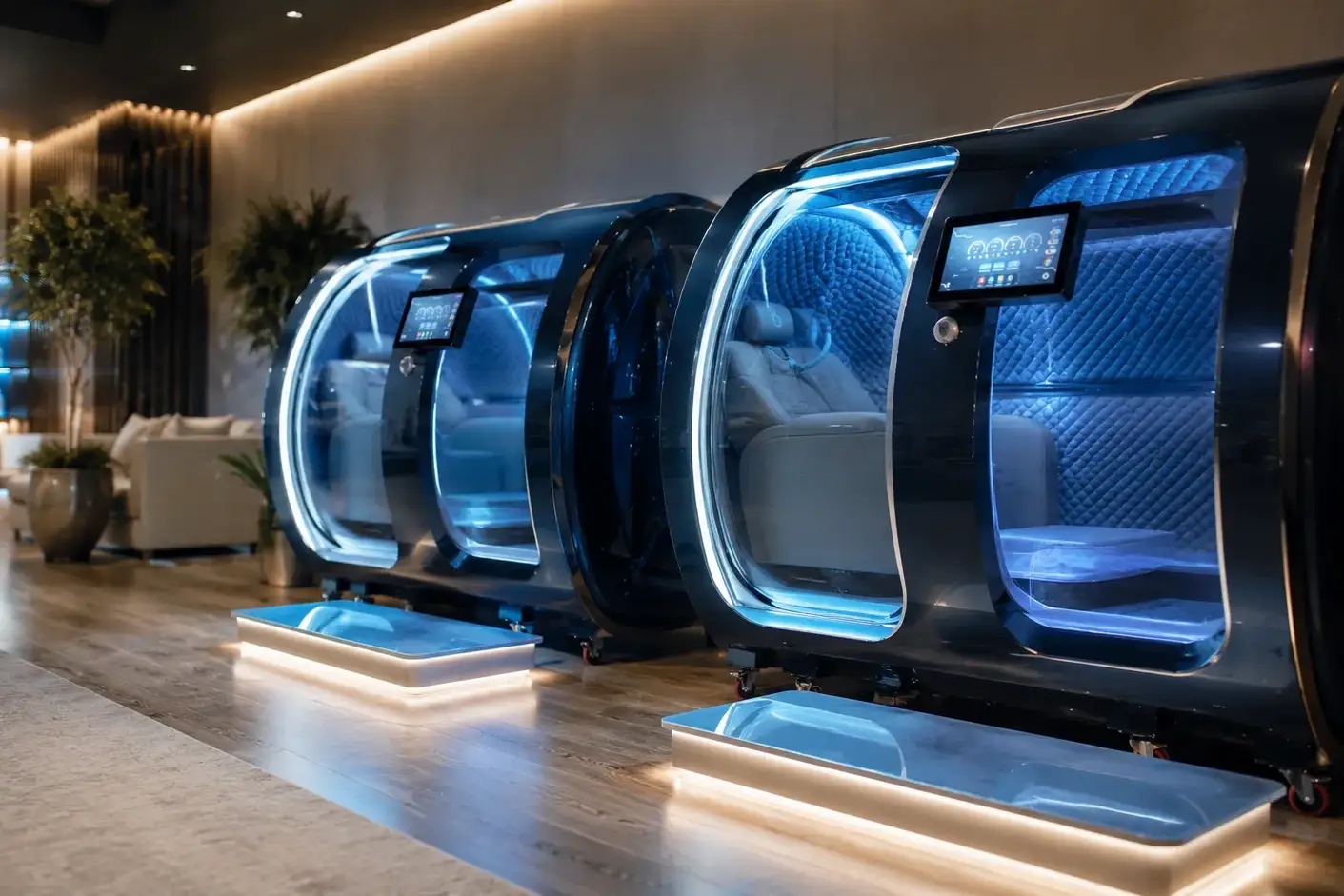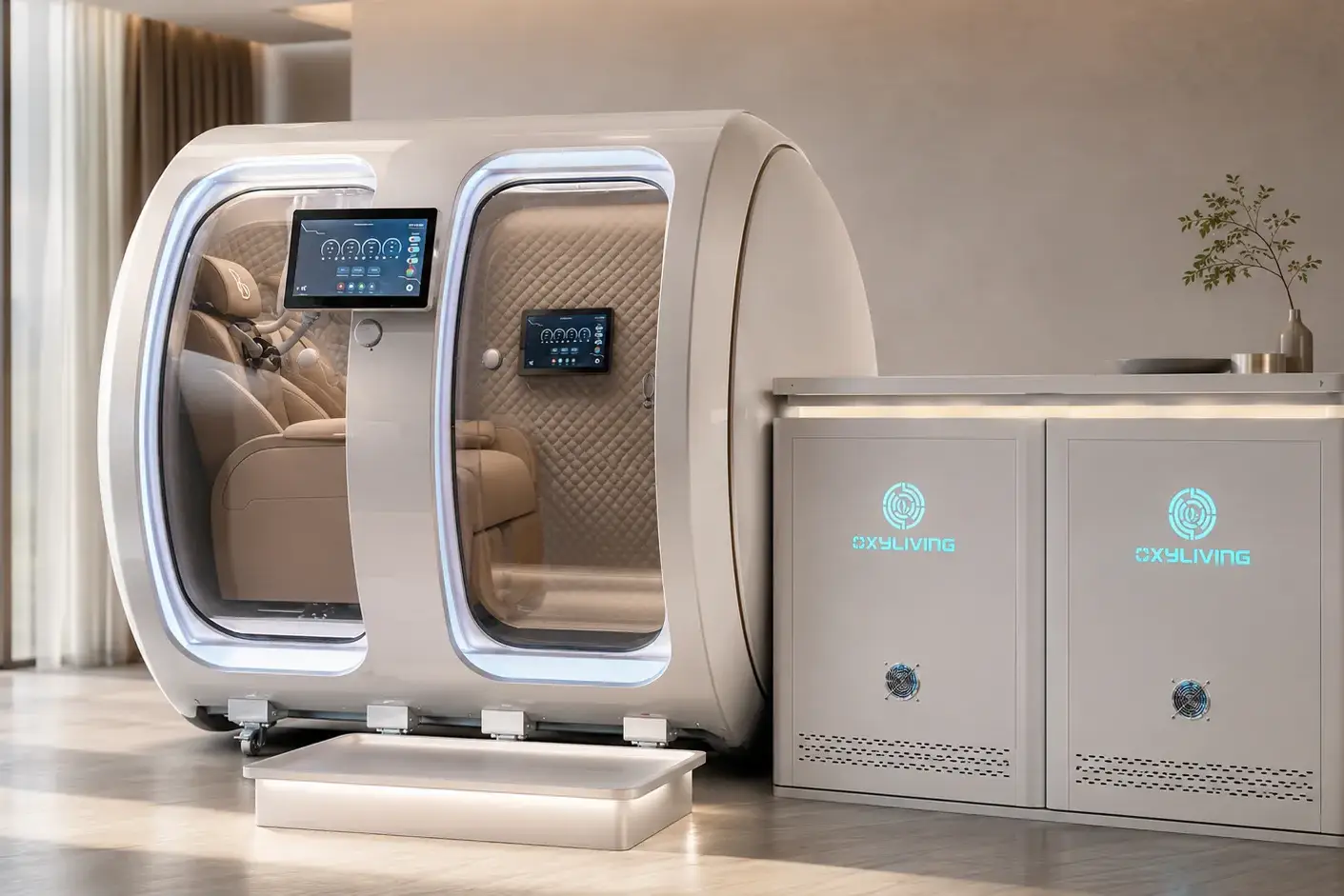


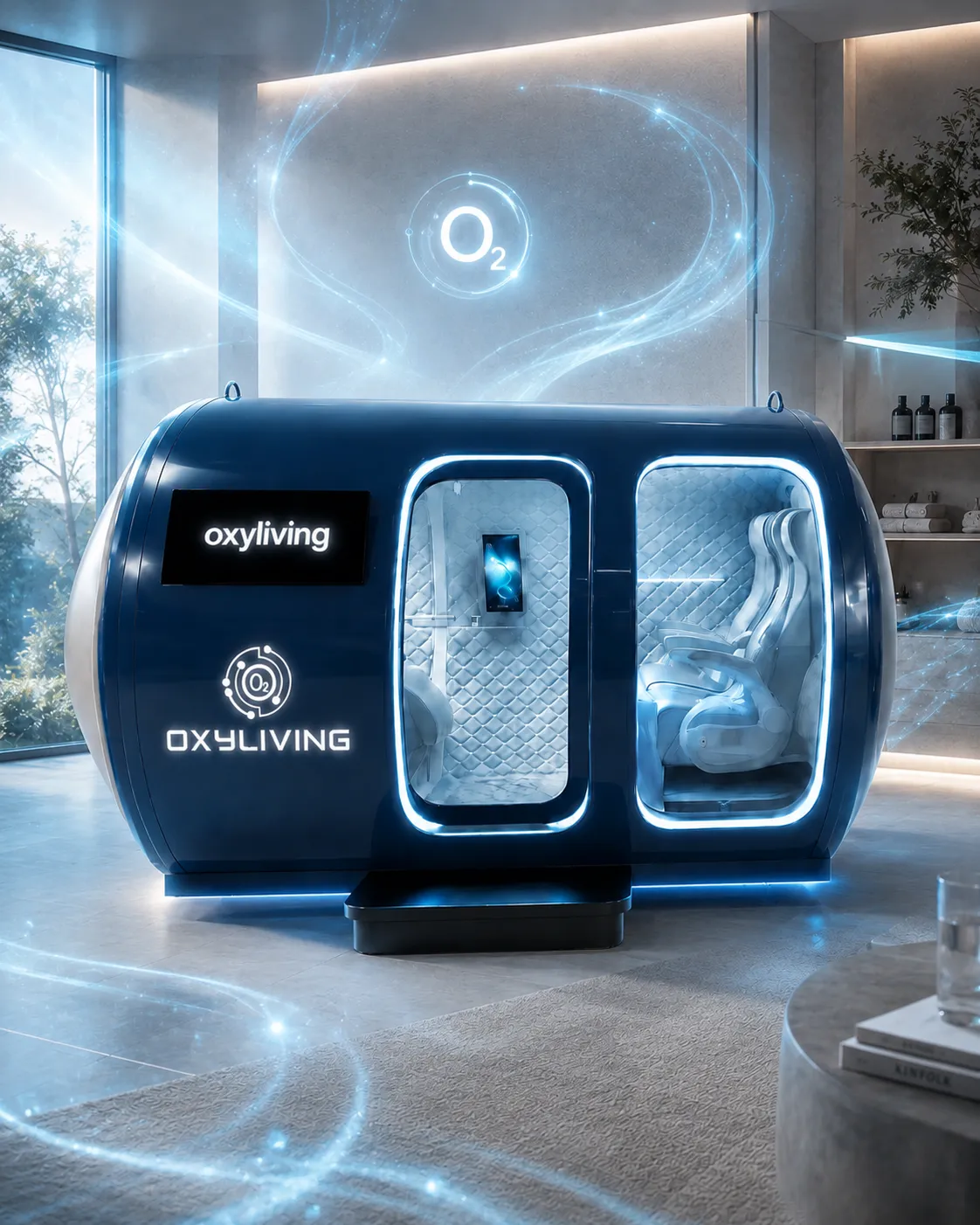
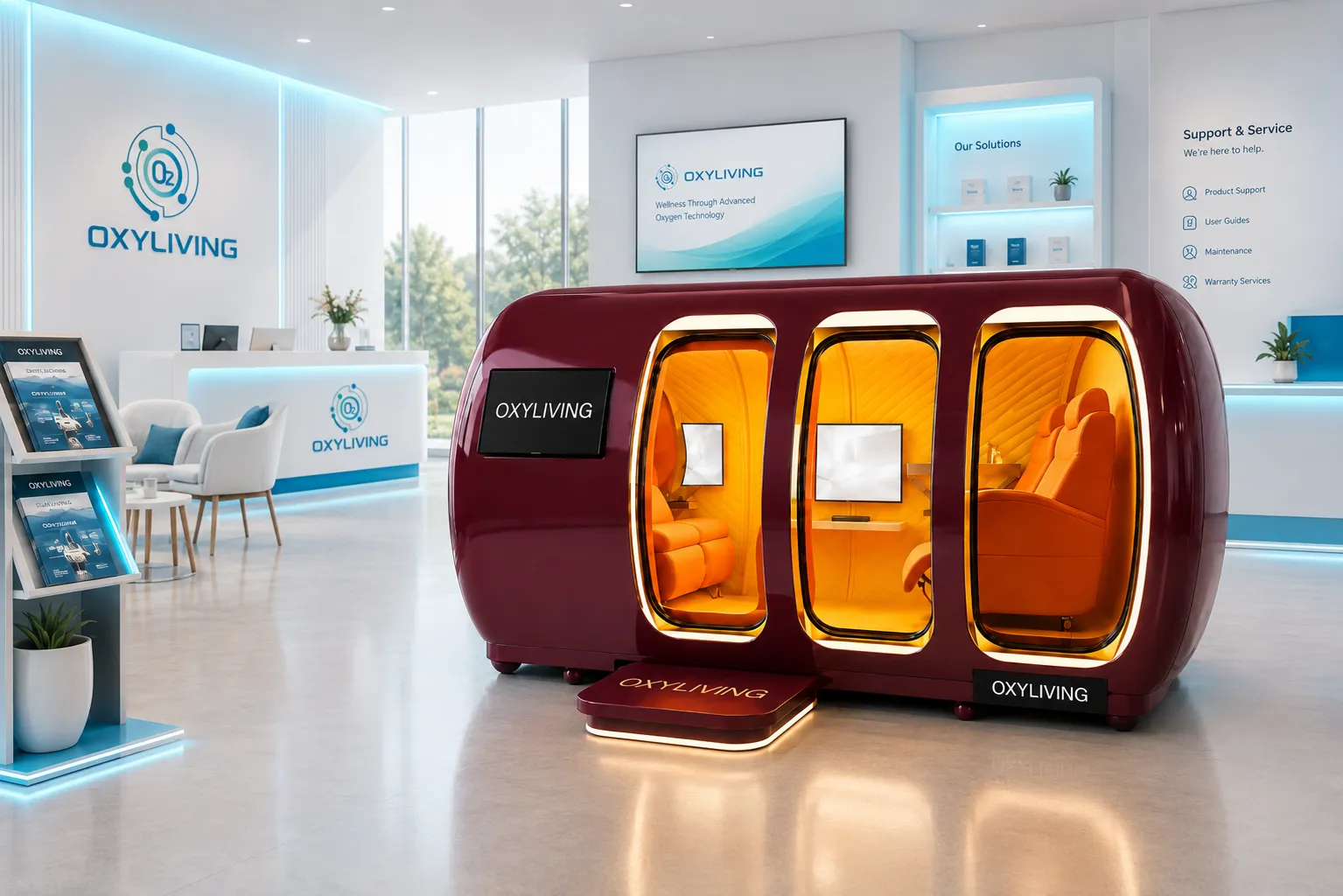




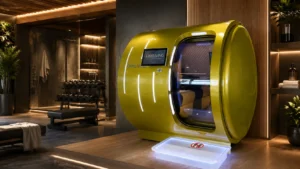
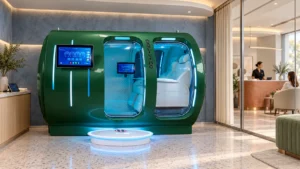
A high-pressure oxygen chamber is a sealed capsule or room where you breathe oxygen-rich air at a pressure higher than the air around us. That single change — more oxygen, under gentle pressure — is the whole idea behind the growing interest in oxygen chambers for recovery, performance and everyday wellbeing. This guide explains what these chambers are, how they actually work, what a session involves, and what to look for, in plain language and without overstating what oxygen can do.
What is a high-pressure oxygen chamber?
A high-pressure oxygen chamber is an enclosed space — either a single-person capsule or a multi-person room — designed to raise the surrounding air pressure while you breathe oxygen-rich air. At normal sea level, the air you breathe is about 21% oxygen at one atmosphere of pressure. Inside an oxygen chamber, both of those numbers change: the pressure rises to roughly two atmospheres, and the air is enriched so that you take in far more oxygen with every breath.
The concept has been used in specialized settings for decades, but modern chambers have made the experience calmer, quieter and far more accessible. Today you’ll find oxygen chambers in homes, wellness studios, sports facilities and recovery spaces, used by people who simply want to spend focused time breathing oxygen-rich air as part of a routine.
It’s worth being clear from the start: high-pressure oxygen is an area of ongoing interest and research, not a promise of specific results. What follows describes how the equipment works and why people explore it — not a medical claim.
How does a high-pressure oxygen chamber work?
The science is more approachable than it sounds. It comes down to a simple principle of physics and how your body carries oxygen.
Pressure and how your body absorbs oxygen
Normally, most of the oxygen you breathe is carried around your body attached to red blood cells. Those cells are already close to fully loaded, so simply breathing harder doesn’t add much. The interesting part happens when you combine oxygen-rich air with higher pressure. Under pressure, more oxygen dissolves directly into the fluid part of your blood — the plasma — beyond what the red blood cells carry. That dissolved oxygen can travel through the circulation and reach tissue that depends on a steady supply.
This is why the two ingredients matter together. Oxygen-rich air on its own, or pressure on its own, doesn’t do the same thing. It’s the combination that defines the high-pressure oxygen experience.
What “2 ATA” actually means
You’ll often see chambers described by their pressure, measured in ATA (atmospheres absolute). One ATA is normal atmospheric pressure at sea level. Most modern oxygen chambers operate at around 2 ATA — roughly the pressure you’d feel about 10 metres underwater. The rise is gradual and gentle, a bit like the feeling of an aircraft descending or driving down from a mountain. Your ears may need a light equalizing pop, and then the pressure simply holds steady for the rest of the session.
Where the oxygen comes from
A quality chamber doesn’t rely on heavy oxygen tanks. Instead, it generates its own oxygen on-site using a built-in concentrator that draws in ordinary room air and filters it down to a high-purity oxygen stream — typically around 93%. This on-site generation is one of the biggest practical advantages of a modern system: no cylinders to store, refill or replace, and a consistent supply every time you use it.
What happens during a session?
One of the most common questions people have is simply: what does it feel like? The honest answer is that it’s calm and uneventful — which is exactly the point. A typical session looks like this:
- Settle in. You recline comfortably inside the chamber, usually with room to relax, read or simply rest.
- Gentle pressurization. Over a few minutes, the pressure rises slowly toward about 2 ATA. You breathe normally and equalize your ears if needed.
- Breathe and relax. For the main part of the session you simply breathe the oxygen-rich air. Many people use the time to unwind, listen to something calming, or close their eyes.
- Gradual return. At the end, the pressure is brought back down slowly, and you step out and carry on with your day.
Sessions commonly last somewhere between 45 and 90 minutes, and people often build them into a regular rhythm rather than treating them as a one-off. There’s no strenuous effort involved — the experience is closer to a quiet reset than a workout.
Who explores high-pressure oxygen, and why?
Because oxygen is fundamental to nearly everything the body does, interest in oxygen chambers spans a wide range of people and goals. These are areas of interest and ongoing research rather than guaranteed outcomes, but they explain why so many different groups are curious:
- Active people and athletes exploring recovery between training and events. You can read more on our Athletic Recovery page.
- People focused on healthy aging, interested in oxygen’s role in cellular renewal and vitality — covered on our Anti-Aging & Longevity page.
- Those interested in focus and mental energy, since the brain is one of the body’s most oxygen-hungry organs — see Cognitive Performance.
- People exploring recovery and circulation, including areas discussed on our Skin Care & Tissue Vitality page.
- Anyone curious about everyday wellbeing — rest, travel recovery and general vitality, gathered on our Other Uses page.
To understand the underlying idea in more depth, our foundational guide on what high-pressure oxygen is is a good next step.
Hard-shell and soft-shell chambers: a quick note
Not all oxygen chambers are built the same way. Broadly, they fall into two families: rigid hard-shell chambers, usually built from aluminium and capable of holding higher, more consistent pressure, and flexible soft-shell chambers, which are lighter and more portable but typically operate at lower pressure. The differences matter for comfort, performance and durability, and they’re worth understanding before any purchase. We cover this in detail in a dedicated comparison guide.
What to look for in a quality oxygen chamber
If you’re considering a chamber for a home, studio or facility, a few practical factors separate a well-engineered system from a basic one:
- Build materials. Marine-grade aluminium (such as 5083 alloy) offers strength and longevity for a rigid, pressure-rated cabin.
- On-site oxygen generation. Built-in concentrators producing around 93% oxygen remove the hassle of cylinders.
- Comfortable, controlled pressure. A smooth rise to around 2 ATA with clear, easy controls.
- Safety systems. Automatic ventilation, multiple oxygen sensors and a well-designed pressure system.
- Everyday usability. Quiet operation, clear displays and a cabin you’ll actually want to spend time in.
You can explore how these features come together across different sizes — from compact single-person capsules to multi-person rooms — on our chambers page.
Frequently asked questions
Is a high-pressure oxygen chamber the same as a hyperbaric chamber?
People use several names for these systems. The defining feature is always the same: breathing oxygen-rich air at a pressure higher than normal. At Oxyliving we describe the experience as high-pressure oxygen because it plainly captures what’s happening.
How long does a session last?
Most sessions run between 45 and 90 minutes, including the gradual pressurization at the start and the gentle return at the end. Many people build sessions into a regular routine.
What does the pressure feel like?
It’s gentle. The rise to around 2 ATA feels similar to an aircraft descending — you may feel a light pressure in your ears that clears with a simple swallow or yawn, and then it holds steady.
Do I need oxygen tanks?
No. A modern chamber generates its own oxygen on-site from ordinary room air, typically at around 93% purity, so there are no cylinders to store or refill.
Can I use an oxygen chamber at home?
Yes. Many chambers are designed for home use, as well as for wellness studios, sports facilities and wellness centres. The right size depends on your space and how many people will use it.
The bottom line
A high-pressure oxygen chamber is, at heart, a simple idea carried out with careful engineering: give the body more of the oxygen it runs on, under gentle pressure, in a calm and repeatable way. It’s an area of genuine and growing interest across recovery, performance, healthy aging and everyday wellbeing. If you’d like to see which chamber fits your space and routine, explore our range of oxygen chambers or request a quote and we’ll help you find the right match.
These are areas of general interest and ongoing research — not promises of results. High-pressure oxygen is not a substitute for medical advice or diagnosis. Please consult a physician for any decisions about your health.
Related Posts
September 21, 2026
What Does Hyperbaric Mean? Rooms and Chambers Explained
Hyperbaric is a technical term for pressure above normal. What the word means,…