







An oxygen chamber session is calmer and more uneventful than most people expect — and that’s exactly the appeal. If you’re curious about oxygen chambers but unsure what actually happens inside one, this guide walks you through a complete oxygen chamber session from the moment you step in to the moment you step out, so you know exactly what to expect before you ever try it.
What an oxygen chamber session feels like: the short answer
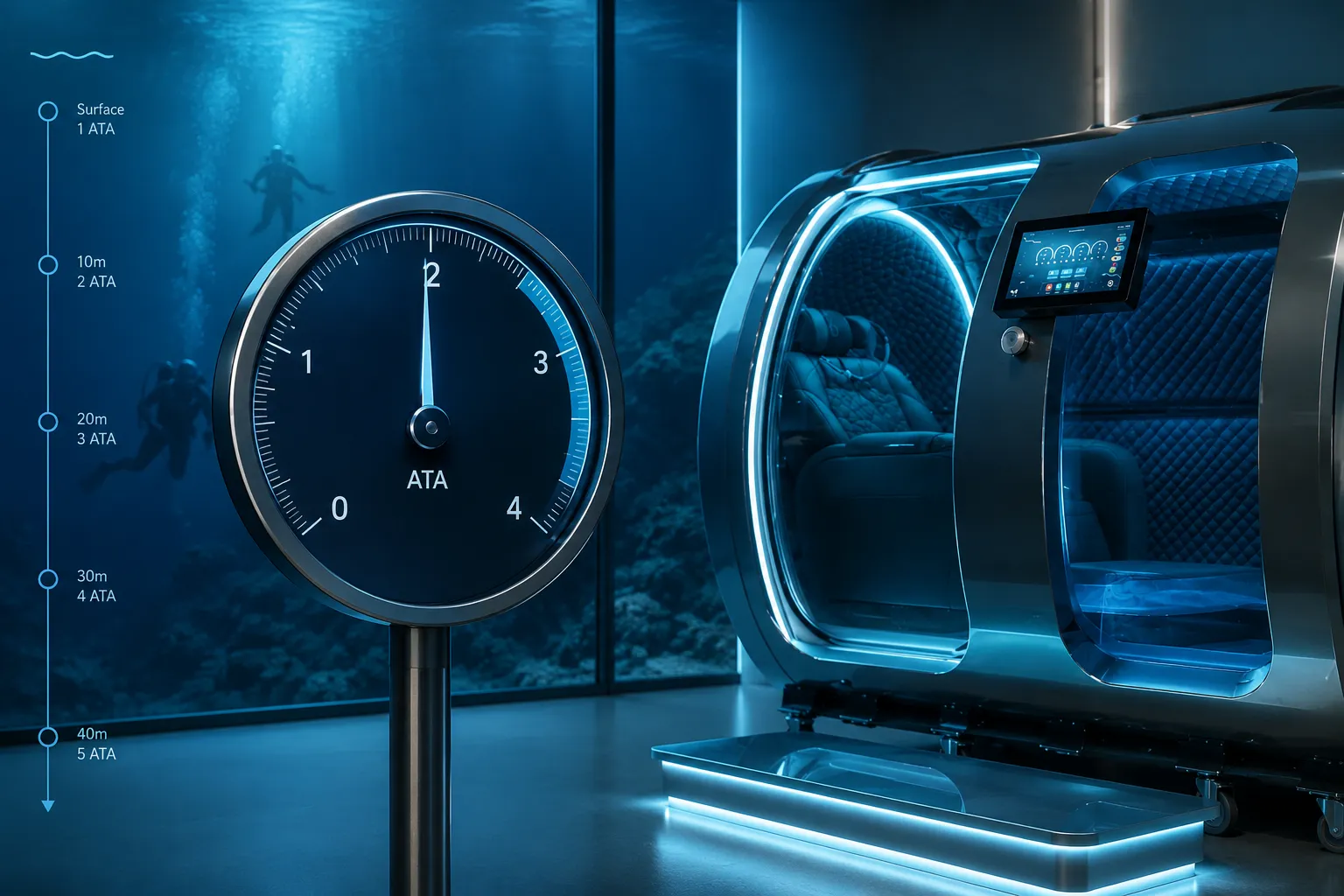
An oxygen chamber session involves reclining comfortably while the pressure rises gently to around 2 ATA and you breathe oxygen-rich air. There’s no effort, no discomfort beyond a brief ear-equalizing sensation, and nothing you need to actively do. Most people spend the time relaxing, reading, listening to music or simply resting. A typical oxygen chamber session lasts 45 to 90 minutes and ends as gently as it begins.
Before your oxygen chamber session
Preparation is simple. There’s no special routine required, but a few small things make the experience more comfortable:
- Wear comfortable clothing. Soft, loose layers work best, since you’ll be relaxing for the better part of an hour.
- Have a light drink of water. Staying comfortably hydrated is always sensible.
- Visit the restroom first. Sessions run for a while, so it’s worth getting settled beforehand.
- Bring something to pass the time. A book, a playlist, a podcast — or just the intention to close your eyes and rest.
If you wear glasses or have sensitive ears, it’s worth knowing that the only physical sensation you’ll notice is a gentle pressure change, much like on an aircraft. Knowing how to equalize your ears — a simple swallow, yawn or gentle pinch-and-blow — is all the preparation your ears need.
Step by step: what an oxygen chamber session actually feels like
1. Settling in
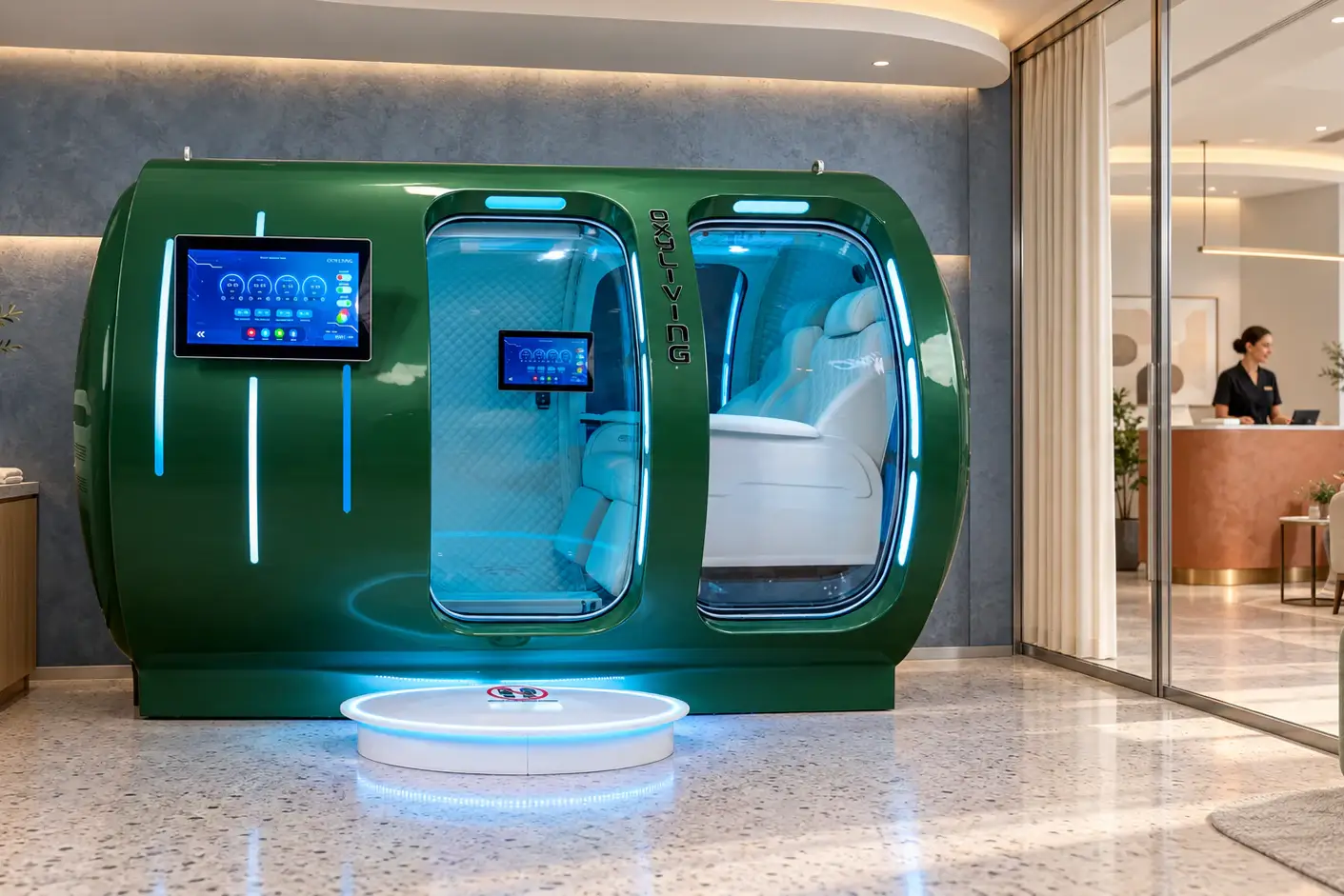
You enter the chamber and make yourself comfortable. In a quality hard-shell chamber, there’s room to recline, clear viewing windows so you never feel closed off, and calm interior lighting. The door seals, and the space feels quiet and private — closer to a personal retreat than a piece of equipment. Many people describe this first moment of an oxygen chamber session as unexpectedly peaceful.
2. Gentle pressurization
Over the first several minutes, the pressure begins to rise slowly toward about 2 ATA. This is the part newcomers wonder about most, and it’s genuinely mild. You’ll feel a light fullness in your ears — the same feeling as a plane descending or a drive down from the mountains. A simple swallow or yawn clears it, and you can equalize as many times as you like as the pressure settles. There’s no rush; the rise is deliberately gradual and comfortable.
3. Breathing and relaxing
Once the chamber reaches its target pressure, it simply holds steady, and this is where the bulk of your oxygen chamber session unfolds. You breathe the oxygen-rich air normally — there’s nothing to control or monitor. For the next 30 to 60 minutes, the experience is yours to shape. Some people work quietly or catch up on reading; many prefer to close their eyes, listen to something calming and let their mind settle. The environment is quiet enough that it becomes a rare pocket of uninterrupted stillness in a busy day.
4. The gentle return
As the session ends, the pressure is brought back down slowly. You may feel your ears adjust again — the same easy sensation in reverse. Within a few minutes you’re back to normal pressure, the door opens, and you step out. There’s no lengthy recovery or downtime; people typically return straight to their day.
What you might notice after an oxygen chamber session
Everyone’s experience is personal, and it’s important to be honest here: high-pressure oxygen is an area of interest and ongoing research, not a guarantee of specific effects. That said, when people describe how they feel after a session, the words that come up most often are calm, clear-headed and refreshed. Many say the quiet, screen-free time is a benefit in itself — an hour of genuine rest they wouldn’t otherwise take.
Because oxygen supports nearly everything the body does, the reasons people build sessions into a routine vary widely, from recovery after training to focus and mental energy to a broader interest in healthy aging. Whatever draws someone in, the oxygen chamber session itself feels the same: unhurried and restorative.
Is an oxygen chamber session uncomfortable or claustrophobic?
This is a common and completely reasonable concern. The reality is that a well-designed chamber goes out of its way to feel open and reassuring. Large viewing windows keep you connected to the room around you, the interior is lit and comfortable, and you can communicate with anyone outside at any time. The pressure change is gentle, not sudden, and you’re always in a calm, controlled environment.
The sensation in your ears is the same one you feel when flying, caused by the change in surrounding pressure. If you’d like to understand why that happens, the idea of pressure equalization in the ear explains how the middle ear balances against the air around it. People who are initially nervous almost always find their first oxygen chamber session far easier than they expected. Spending your first session with someone nearby, keeping the lights on, or simply focusing on a relaxing playlist can make the experience feel completely natural from the start.
How often do people book an oxygen chamber session?
There’s no single rule, and how often someone uses a chamber depends entirely on their goals and routine. What most people have in common is that they treat it as something regular rather than a one-off — the value comes from making an oxygen chamber session a consistent habit, in the same way people approach exercise, good sleep or any other part of a wellbeing routine. Having a chamber at home or easy access to one at a studio makes that consistency far simpler to maintain.
Making the most of your oxygen chamber session
A few simple habits help people get the most out of their time in the chamber:
- Treat it as protected time. Silence notifications and let the session be a genuine break.
- Find your ritual. Whether it’s a particular playlist, a breathing rhythm or simply closing your eyes, a small routine helps you settle quickly.
- Stay relaxed while equalizing. Equalize your ears early and gently as the pressure rises, rather than waiting.
- Be consistent. Like most wellbeing practices, a regular oxygen chamber session tends to fit into life better than occasional ones.
Frequently asked questions
Does an oxygen chamber session hurt?
No. The only physical sensation is a gentle pressure change in your ears as the chamber pressurizes and depressurizes, similar to flying. It’s easily managed by swallowing or yawning, and the rest of the session is completely comfortable.
How long is a typical oxygen chamber session?
Most sessions last between 45 and 90 minutes, including the gradual pressurization at the start and the gentle return at the end.
What should I do during the session?
Whatever helps you relax. Many people read, listen to music or podcasts, or simply rest with their eyes closed. There’s nothing you need to actively manage — the chamber handles everything.
Will I feel strange when I come out?
Most people step out feeling calm and refreshed and return straight to their day. There’s no significant downtime associated with an oxygen chamber session.
Can I talk to someone while I’m inside?
Yes. A well-designed chamber lets you stay in contact with anyone outside, and viewing windows keep you connected to the room, so you never feel isolated.
What if I feel claustrophobic?
Modern chambers are built to feel open, with large windows, interior lighting and the ability to communicate at all times. People who feel nervous at first almost always find their first oxygen chamber session much easier than expected. Keeping the space bright and focusing on something relaxing helps.
The bottom line
An oxygen chamber session is calm, comfortable and easy — a quiet hour of reclining and breathing oxygen-rich air, bookended by a gentle rise and fall in pressure. There’s nothing to fear and very little to do, which is exactly what makes it such an appealing part of a wellbeing routine. If you’d like to experience it in a chamber built for genuine comfort, explore our range of oxygen chambers or get in touch and we’ll help you find the right fit.
These are areas of general interest and ongoing research — not promises of results. High-pressure oxygen is not a substitute for medical advice or diagnosis. Please consult a physician for any decisions about your health.
Related Posts
September 21, 2026
How Much Does a Hyperbaric Chamber Cost?
Hyperbaric chambers have no list price. What actually drives the cost, what you…

September 21, 2026
What Does Hyperbaric Mean? Rooms and Chambers Explained
Hyperbaric is a technical term for pressure above normal. What the word means,…